
18.4.Opening shortcuts from Teams
The user can convert the archived files to shortcuts in the Teams archive. This option is generally used for archived items older than 1 or 2 years (it changes from company to company).
During the process, the Administrator can decide which shortcut type he wishes to use: “Keep original”, “HTML shortcut“, or “Modern shortcut“. (For more information about the archive job and the convert archived files to shortcuts option, please refer to this chapter of the contentACCESS documentation.)
If he uses the “Keep original” option, the files will be converted into shortcuts, but in the Teams and on the Team-related SharePoint site (unless the shortcut can manage the version history), the files will be keeping the original format, and the user will be able to open them easily.
On the other hand, when the Administrator uses the “HTML shortcut” type to convert the archived files into shortcuts, the Teams items (and custom SharePoint data) will be replaced with HTML files in the Teams and on the Team-related SharePoint site. In this case, the whole version history is deleted, and the user can open the archived item through the actions available on the HTML shortcut in Teams (or in SharePoint).
When the Modern shortcut type is used, the archived file is replaced with a .alink shortcut file. This shortcut uses a Microsoft 365 technology called M365 File Handler, which allows Teams and the Team-related SharePoint site to recognize the file type and automatically redirect the user to contentACCESS when the shortcut is opened.
A) Opening HTML shortcuts from Teams/Team-related SharePoint site
1. Open the file by clicking on the title
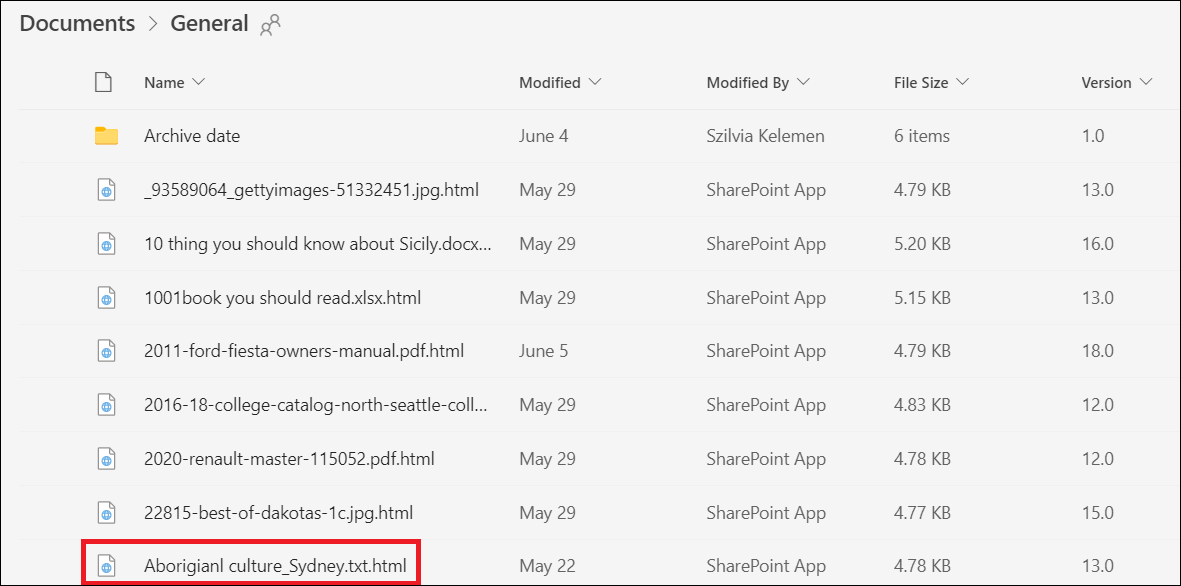
2. The selected file will be opened on the same tab – here, the user can open, share, copy, download (etc..) the file, close this tab, or carry out the activities related to the shortcut opening.
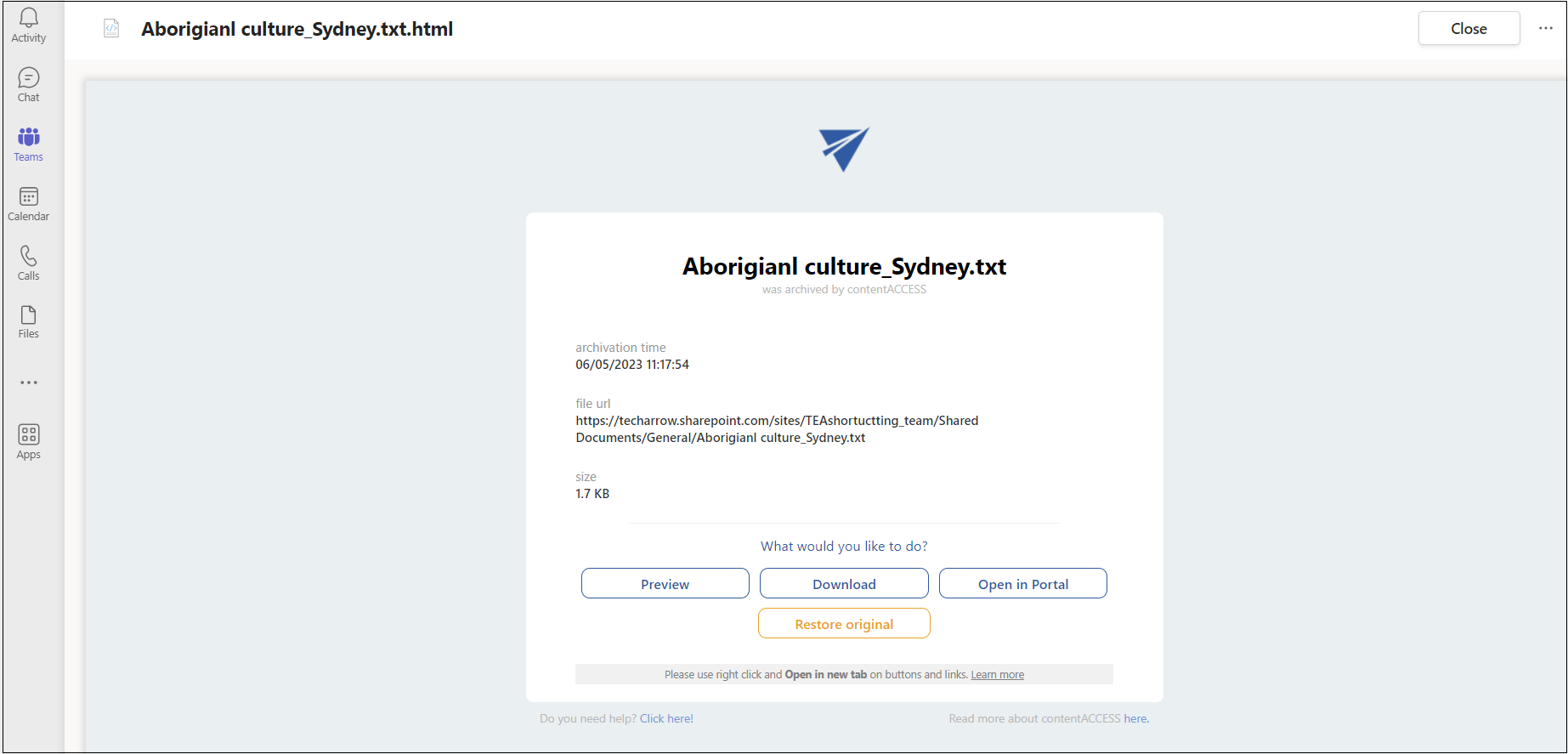
3. In this tab, the following shortcut opening-related options are available for the user with some basic information as well – archivation date, file URL (location of the item on Teams), and size:
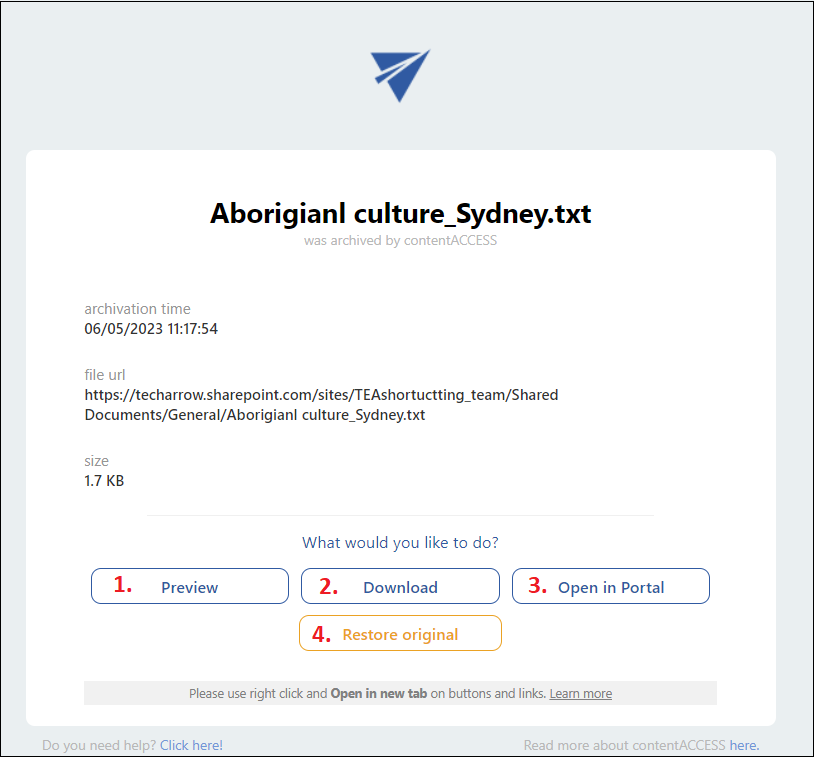
- Preview – you can open the archived file’s preview by using the right click and “Open link in a new tab” on the Preview button. The user will be redirected to the Preview service page, where the original file will be shown. From here, the user can download the original file, save it as PDF, or restore the shortcut.
- Download – this button allows the user to download the original file (instead of the shortcut). It is required to use the right click and “Open in new tab” option on this button as well.
- Open in Portal – this option allows the user to check the archived item in the contentACCESS Portal. In the Portal, the user can see the version history of the selected file, check the item and/or file preview, download the document, or see all other items from the same folder. For more information about the item preview in Portal, refer to the Item list and item preview section of the manual.
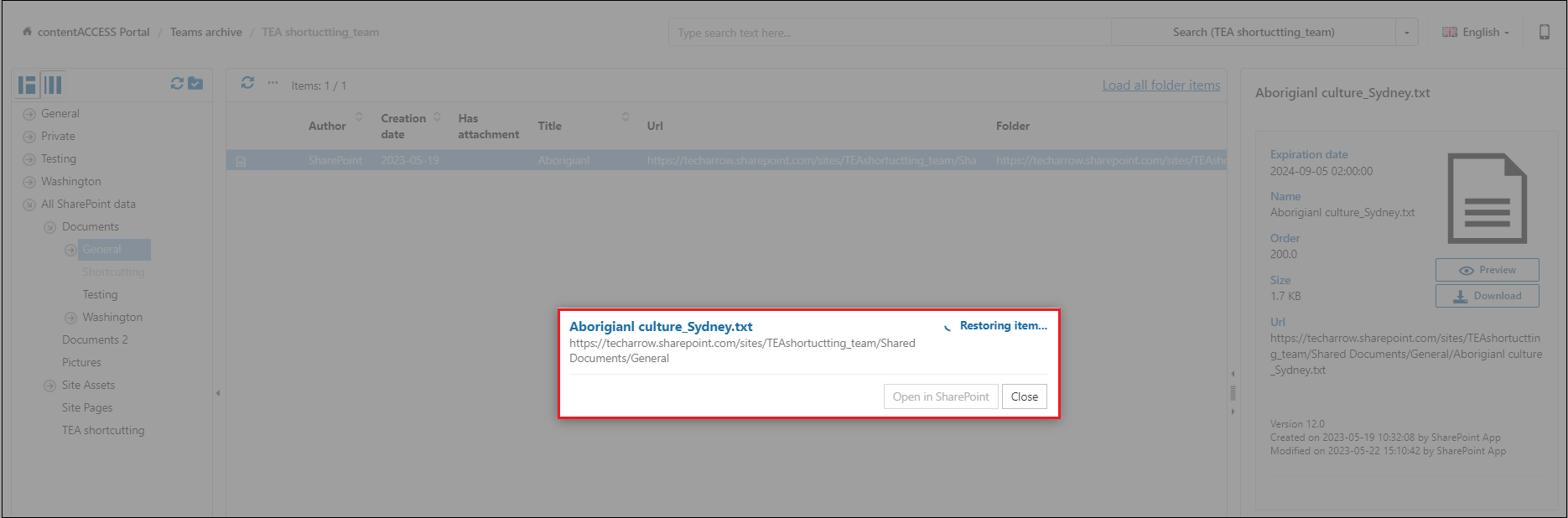
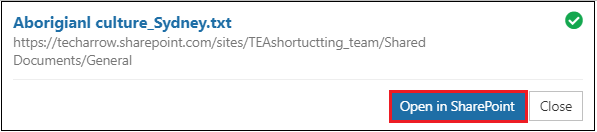
- Restore original – it is also possible to restore the shortcut to the original file from here. In this case, the selected item is opened in the Portal, and the restoring process appears in a pop-up window. When the process is finished, the user can open the restored file in SharePoint (opened in a new tab) or cancel the action and stay on the Portal. This option works similarly to the Recover selected item(s) function in the Portal.
B) Opening Modern shortcuts from Teams or Team-related SharePoint site:
Modern shortcuts in Teams can only be opened from the context menu by selecting Open → contentACCESS shortcut handler or Preview.
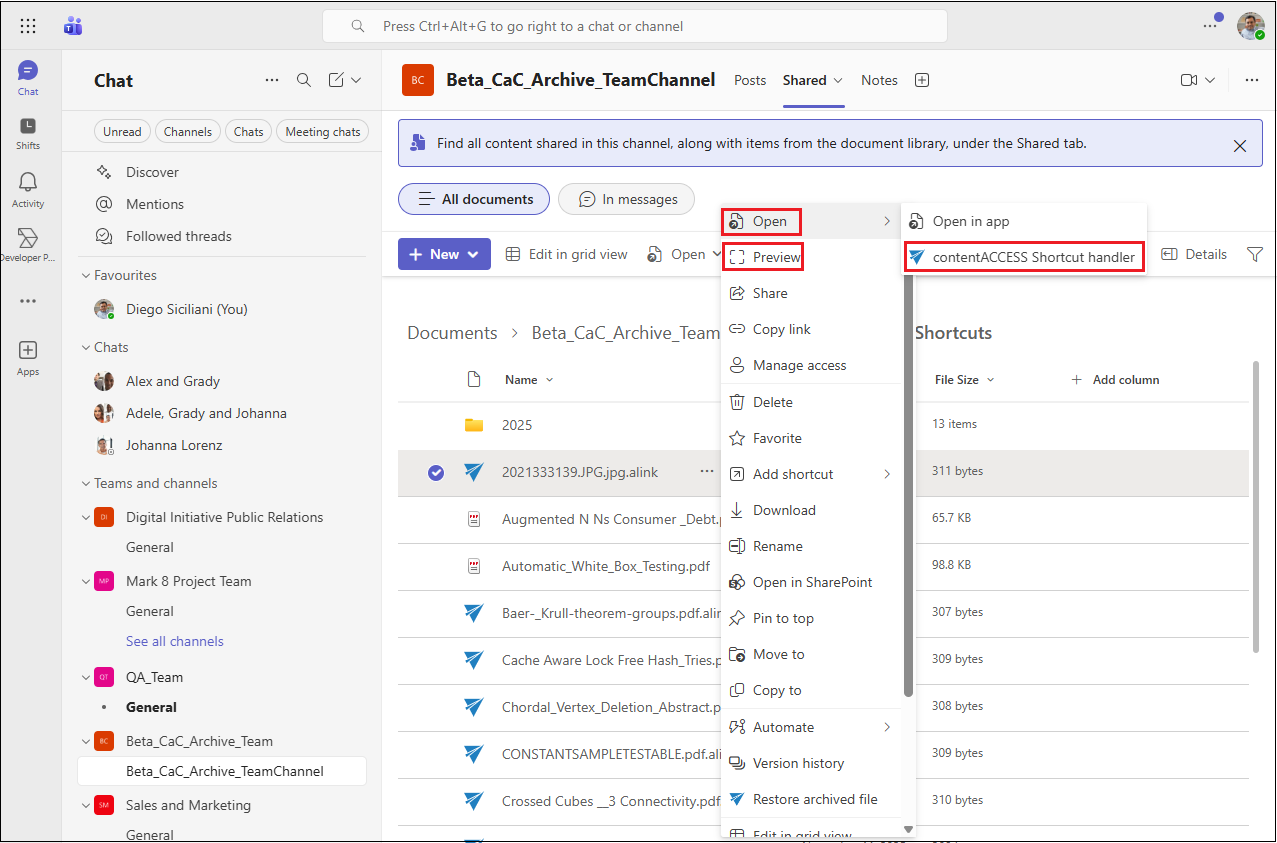
Opening the shortcut by clicking on the file name is not possible—this is a known limitation. However, on a SharePoint site connected to Teams, the shortcut can be opened by clicking on the file name (To read more about opening shortcuts from the SharePoint site, please refer to this chapter in the documentation.). This limitation applies only within Teams. Please use the context menu options Preview or Open > contentACCESS Shortcut handler to open shortcuts from Teams.
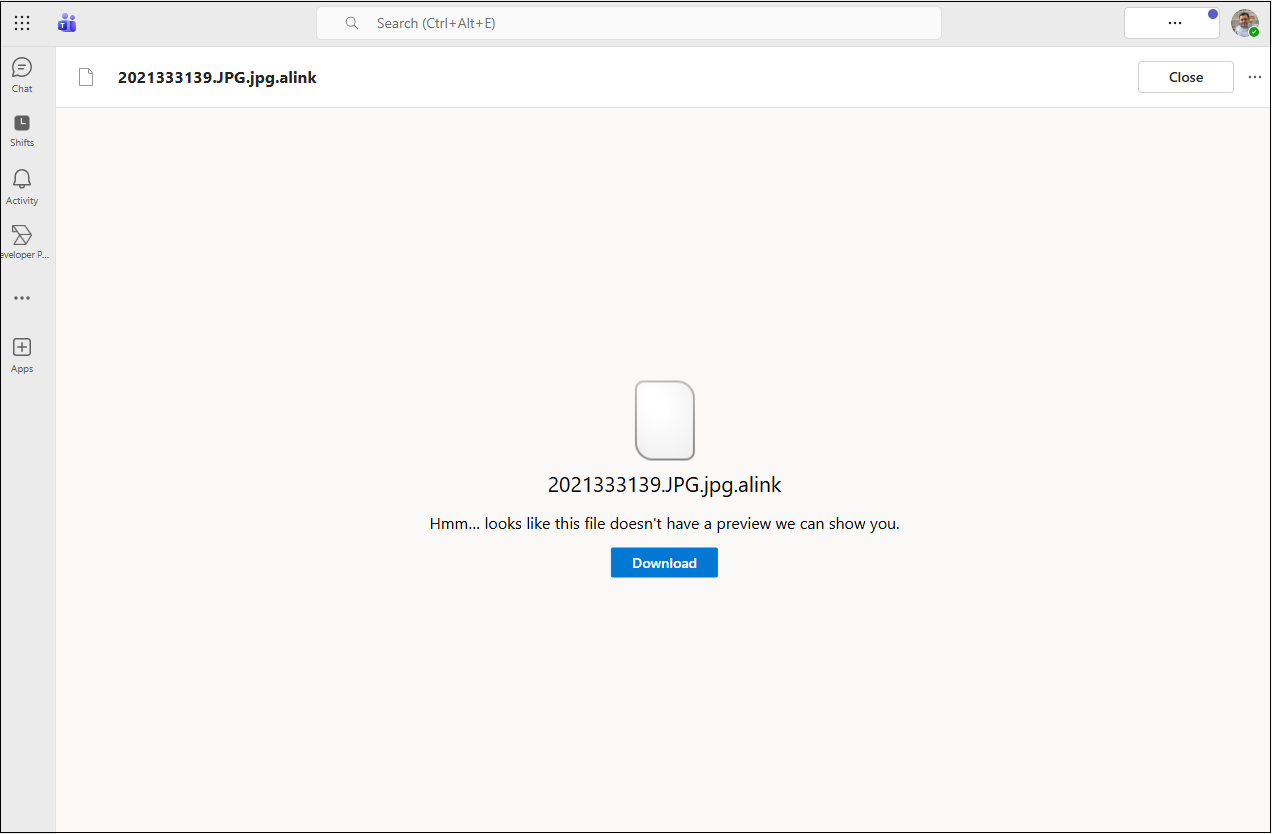
Open shortcuts via context menu (…) -> Preview
This option opens a preview of the shortcut with some basic information: archivation time, file URL (location of the item on SharePoint), size, modification date, etc. In this window, the following actions are available to the user:
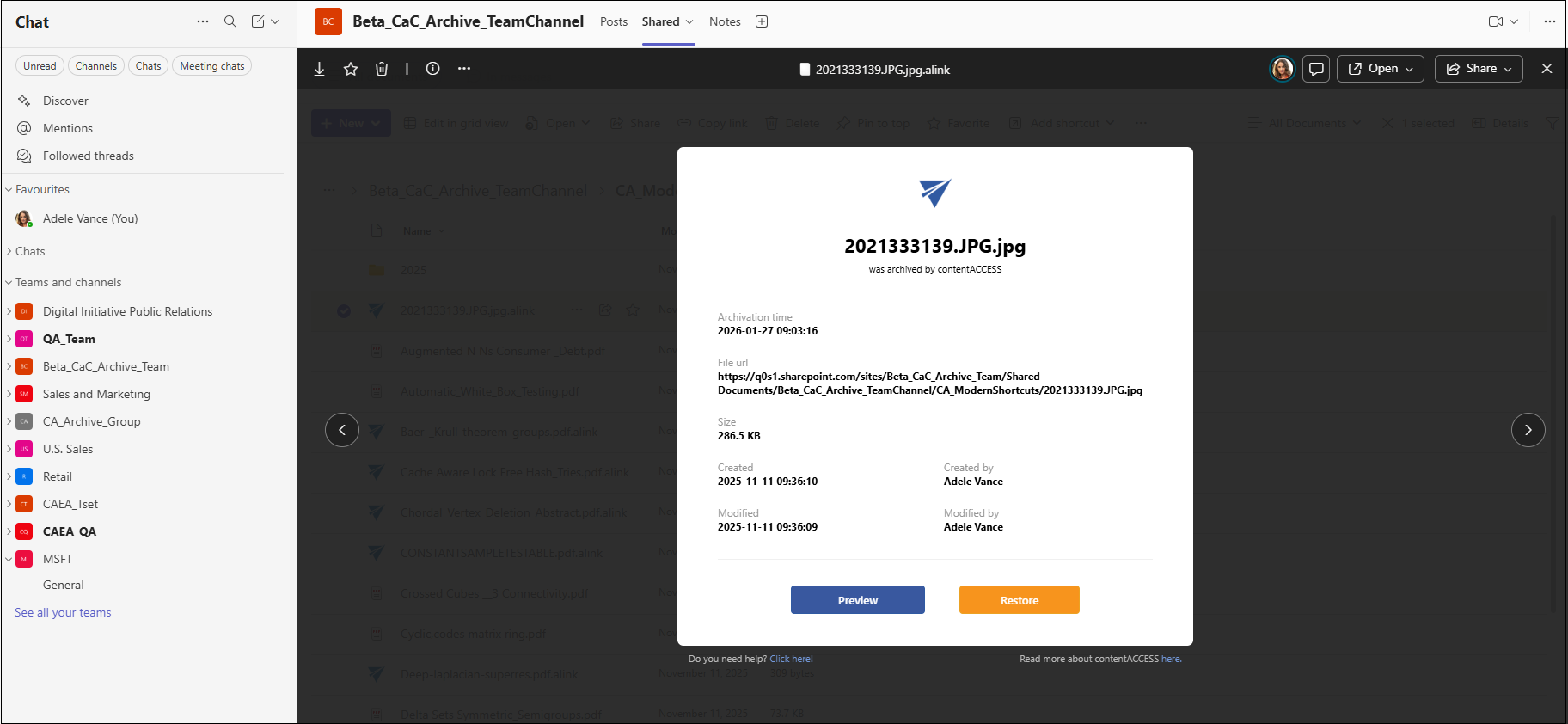
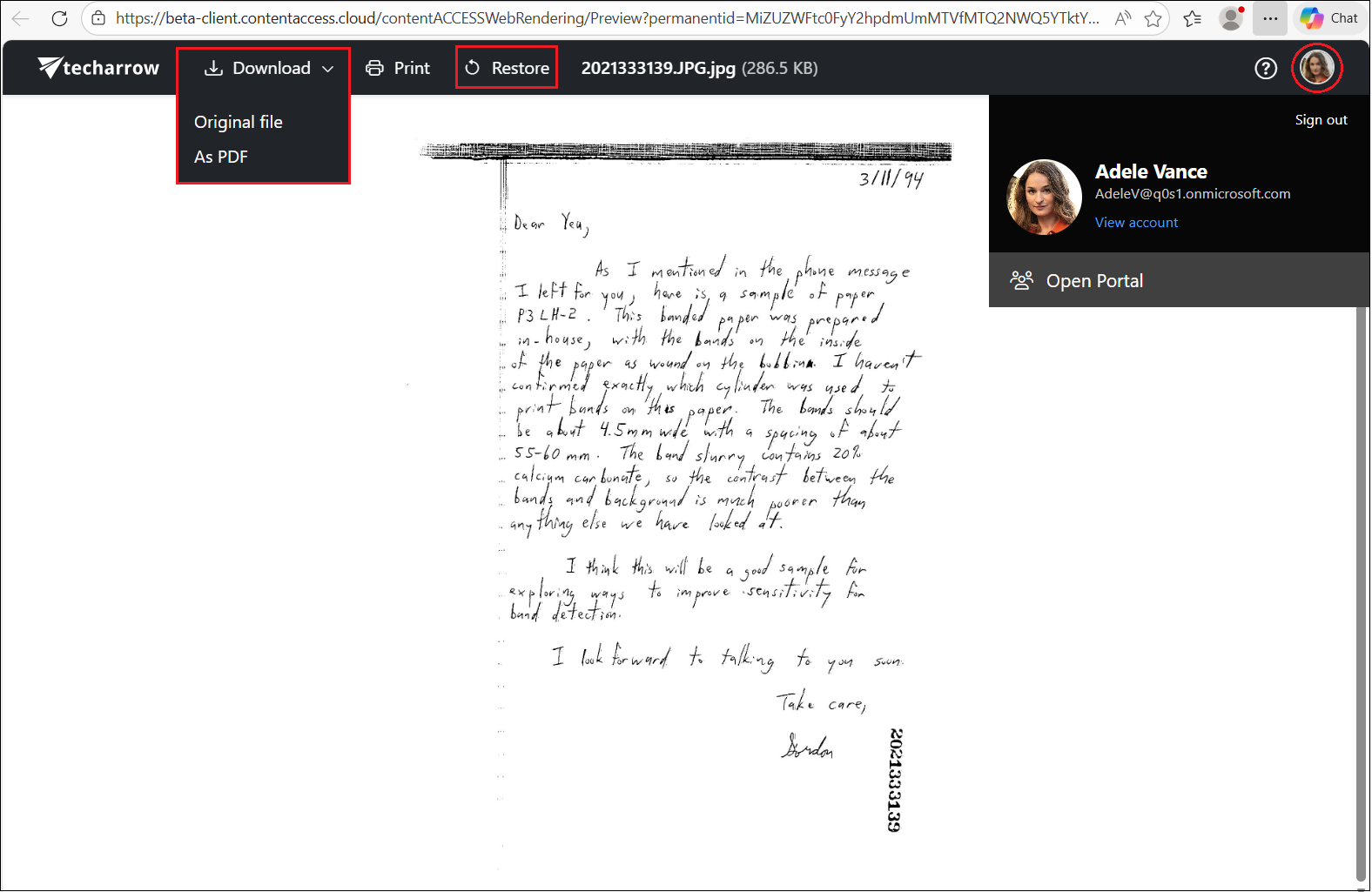
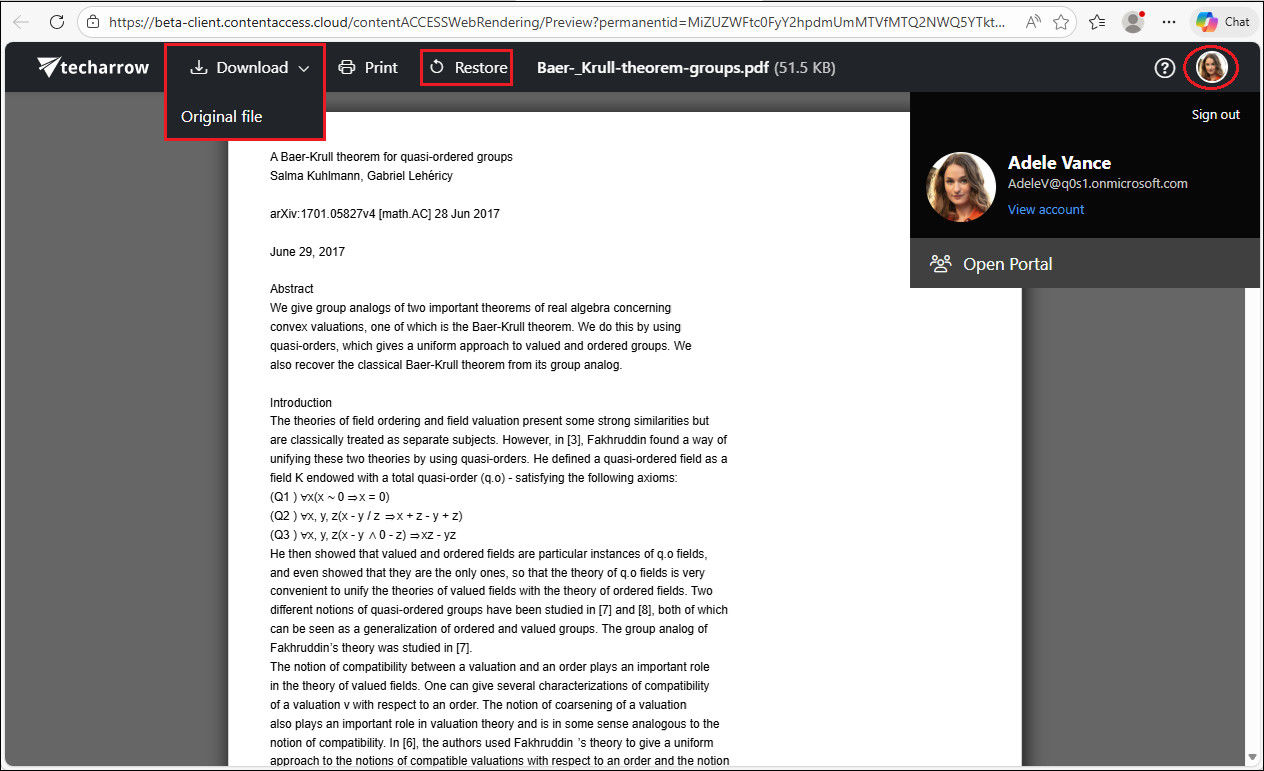
- Preview – it opens the file preview, where you can download the original file, save it as a PDF, or restore the shortcut. From the header, you can open the documentation through the question mark, and you will also see the initials of the logged-in user. By clicking on it, you can view the user’s name and email address, access the profile (View account), log out, or open the related item directly in the contentACCESS Portal using the Open Portal option.
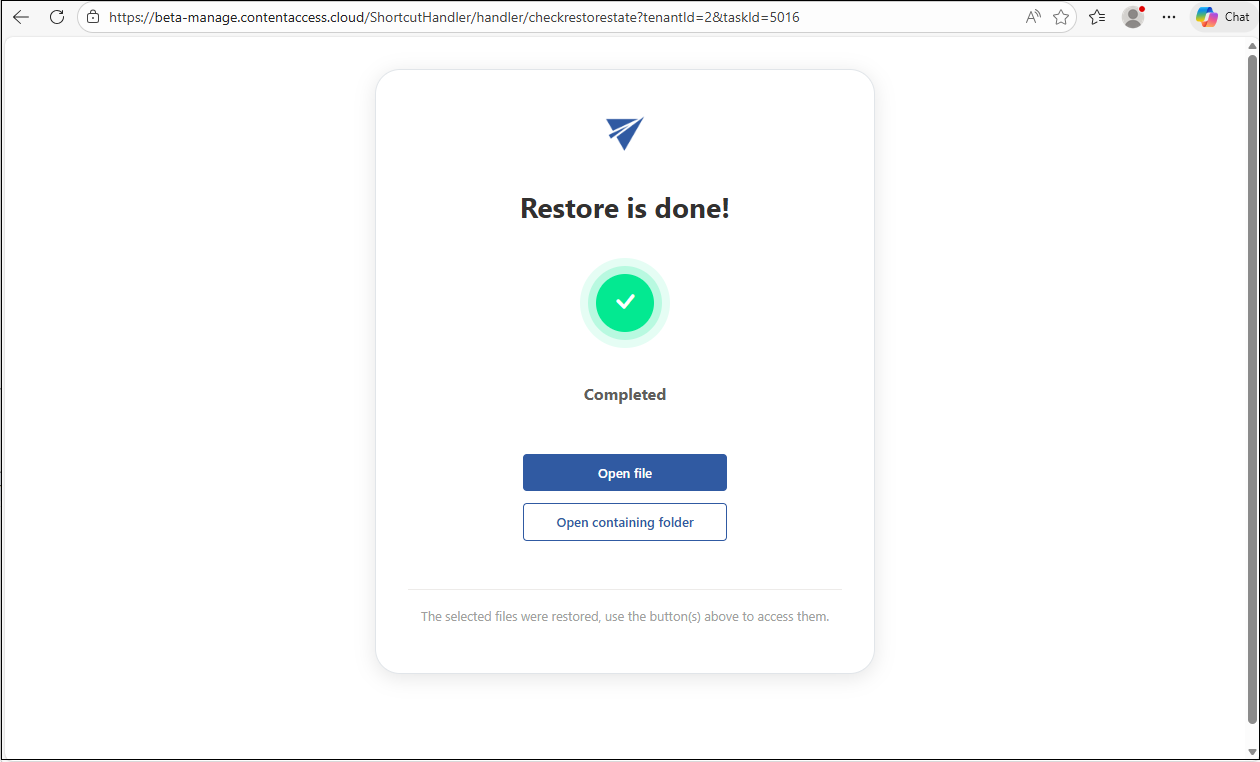
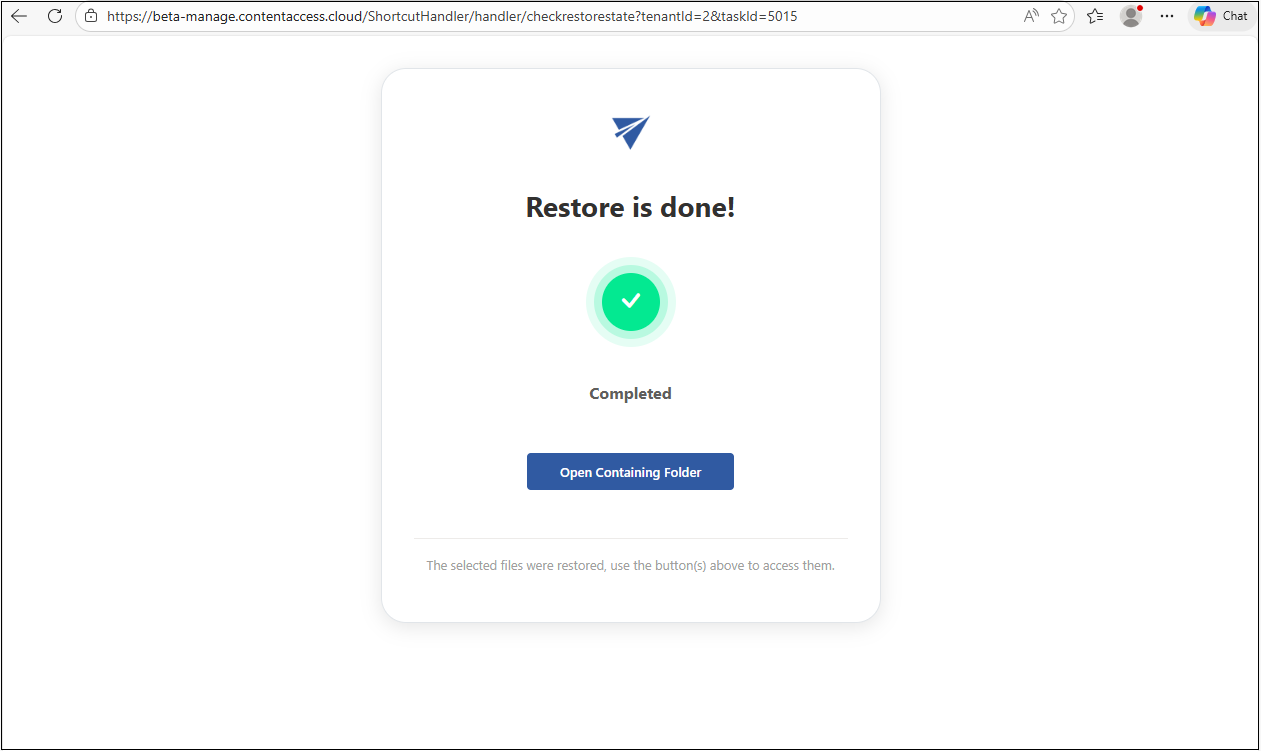
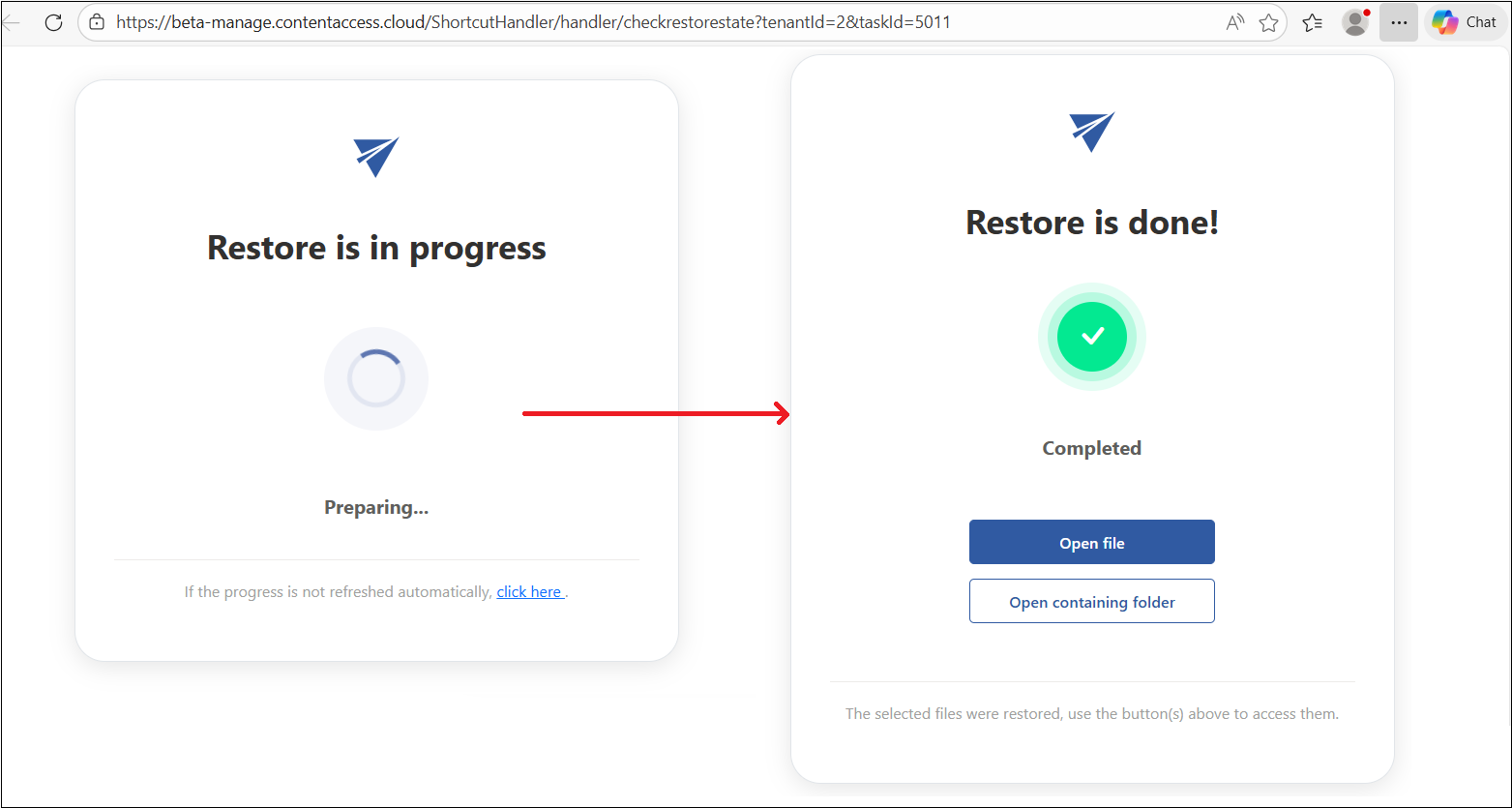
- Restore – this button starts the restore process in a new window. Once the restore is complete, you can either open the restored file or open the folder on SharePoint that contains the file. After closing the preview, the file will be available again in Teams or Team-related SharePoint site with its original format.
Open shortcuts via context menu (…) -> Open > contentACCESS Shortcut handler
This option works the same as the Preview button from the Preview option: the selected file opens in a new window, where its content is displayed. Here, you can download the original file, save it as a PDF, or restore the shortcut. From the header, you can open the documentation through the question mark, and you will also see the initials of the logged-in user. By clicking on it, you can view the user’s name and email address, access the profile (View account), log out, or open the related item directly in the contentACCESS Portal using the Open Portal option.
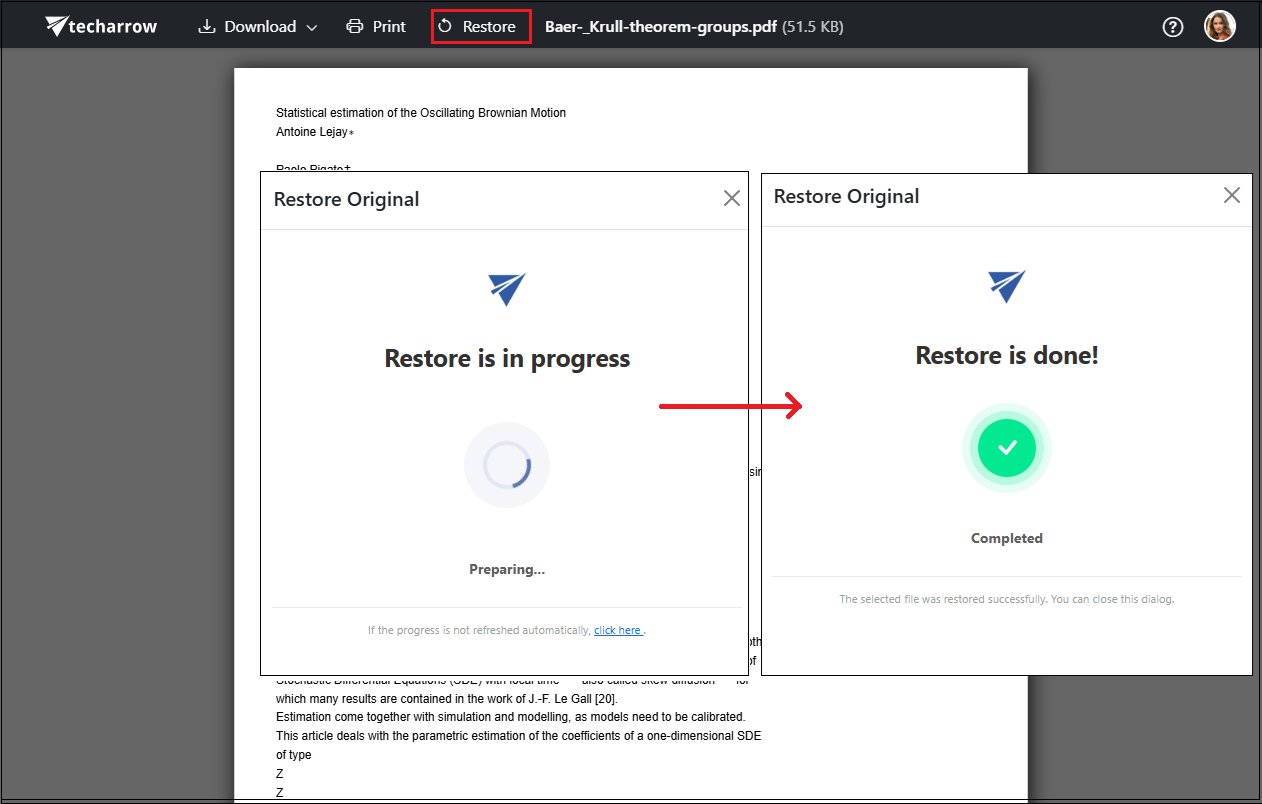
When restoring from the preview, the Restore in progress window appears, followed by Restore is done! once the process is complete. After closing the preview, the file will be available again in SharePoint with its original format.
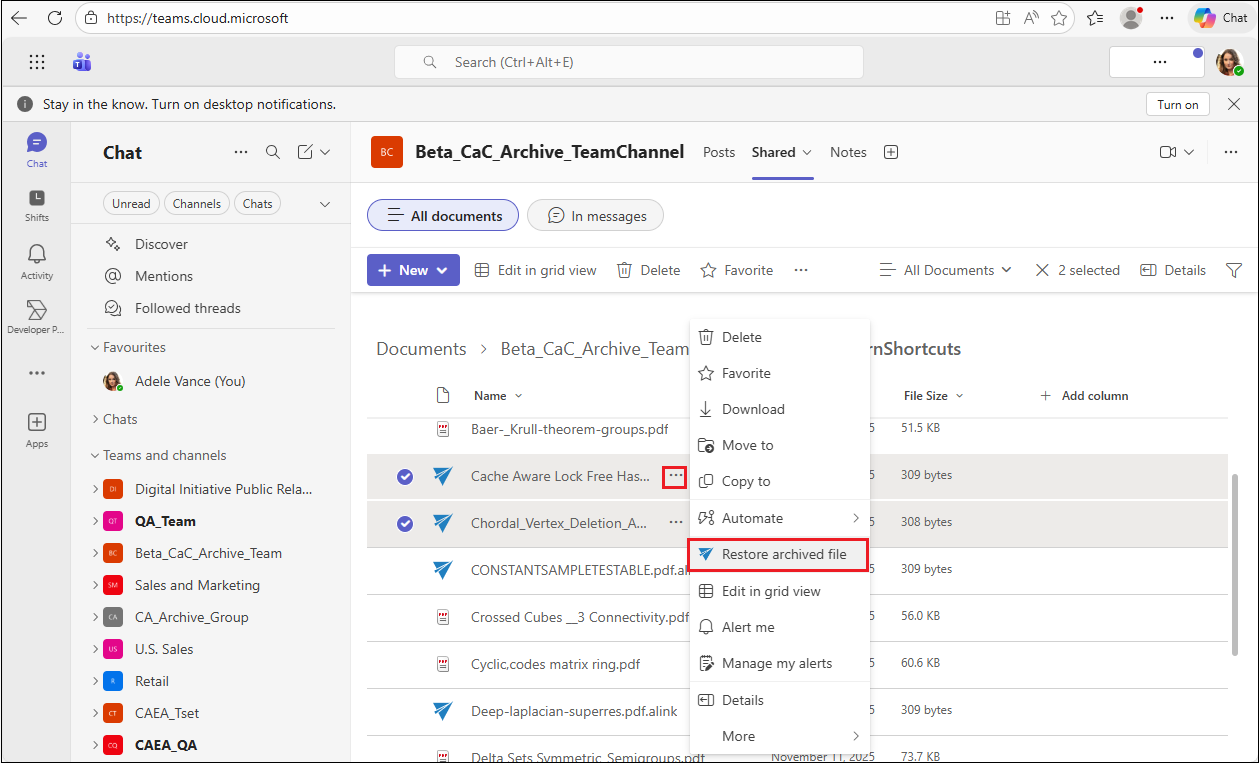
Alternatively, you can select one or more shortcuts from the Teams (or Team-related SharePoint site) and restore them from the context menu (… -> Restore archived file).
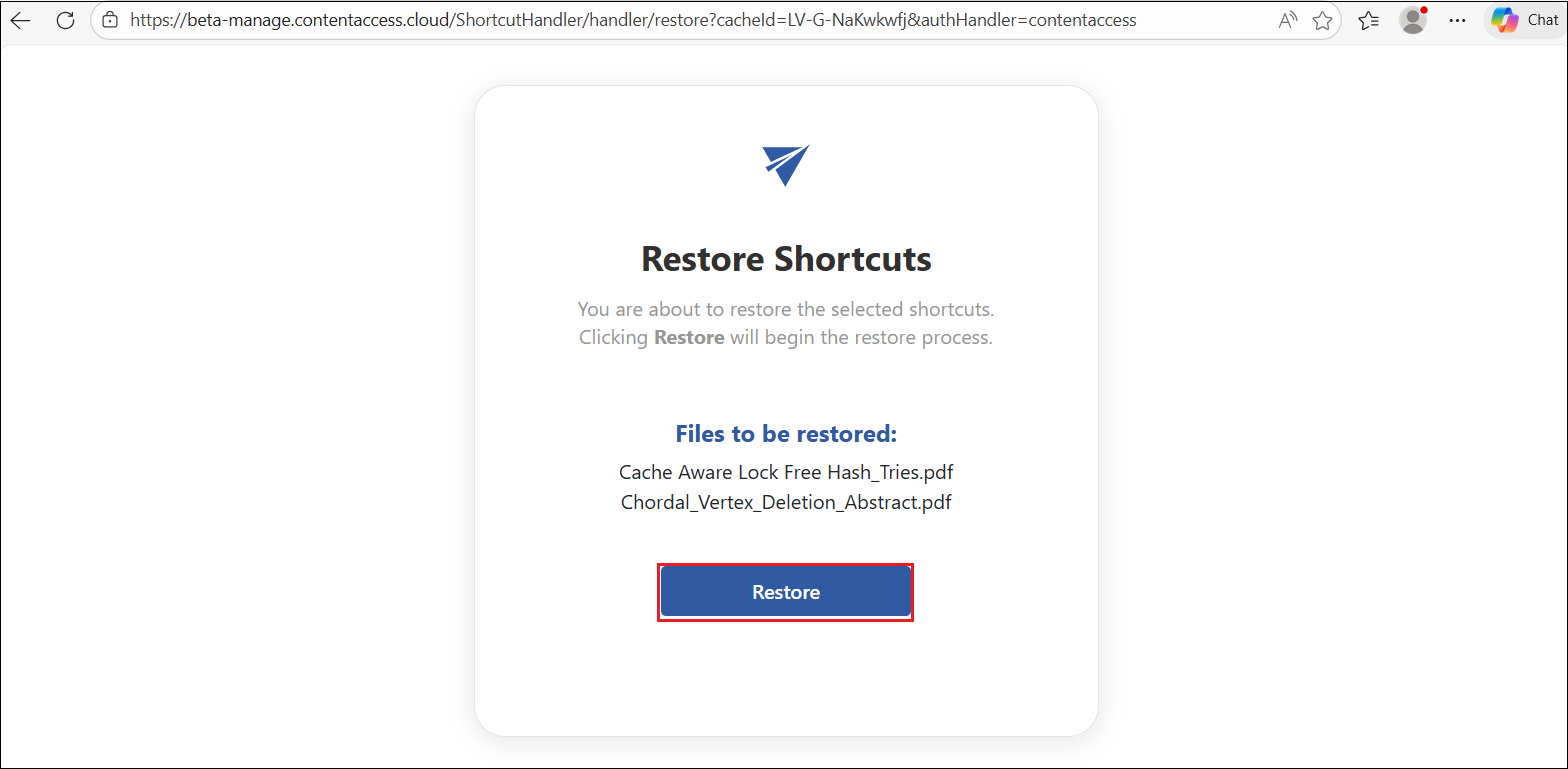
It opens the Restore Shortcuts window, where multiple files can be processed at once. Clicking the Restore button starts the process.
Once finished, two options appear: Open file (available only for single-file restore!) and Open containing folder. The Open file button opens the restored file, while Open containing folder takes you to the folder in the Team-related SharePoint site where the file is located.